
Radar Level Sensor
RS-60
Tank level. From the outside.
Measures through the wall of plastic tanks with 60 GHz radar. For boats, motorhomes, vehicles and storage tanks.
- No drilling
- Nothing in the liquid
- 12 and 24 V
Why radar
No holes. No floats.
No wear.
Float sender
A hole in the tank and an arm in the liquid. It wears, and it can stick.
Tube sender
A hole in the tank and a tube in the liquid that gets dirty. Cut to the height of the tank.
RS-60
Stuck on top. Nothing in the tank, nothing that wears. One size for every tank up to 300 cm.
| Float | Tube | RS-60 | |
|---|---|---|---|
| No hole in the tank | no | no | yes |
| Nothing in the liquid | no | no | yes |
| No moving parts | no | yes | yes |
| No fouling or corrosion | no | no | yes |
| One size for every tank height | no | no | yes |
How it works
Measures through
the tank wall.
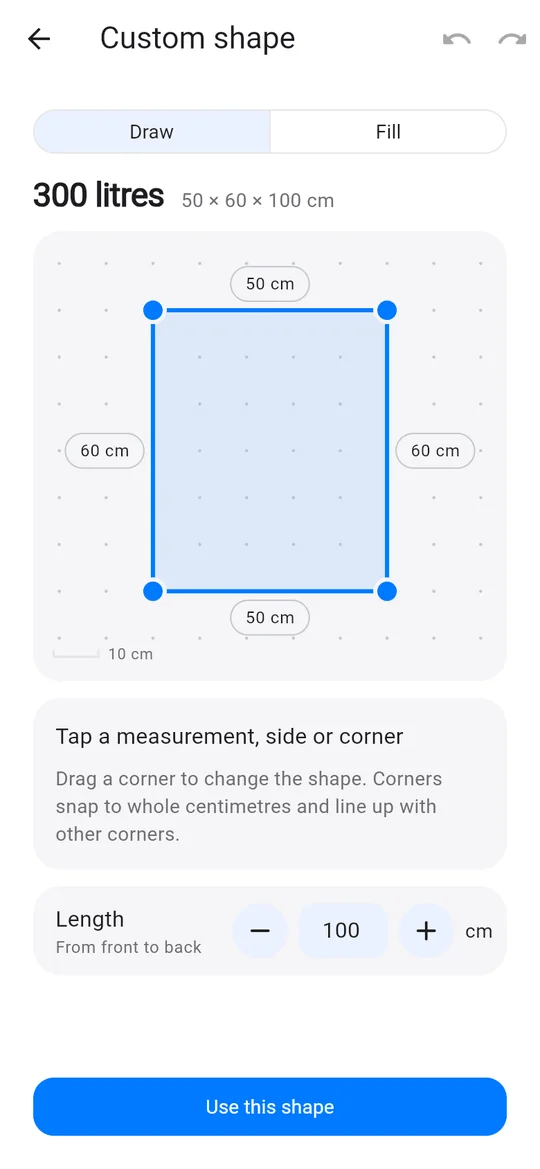
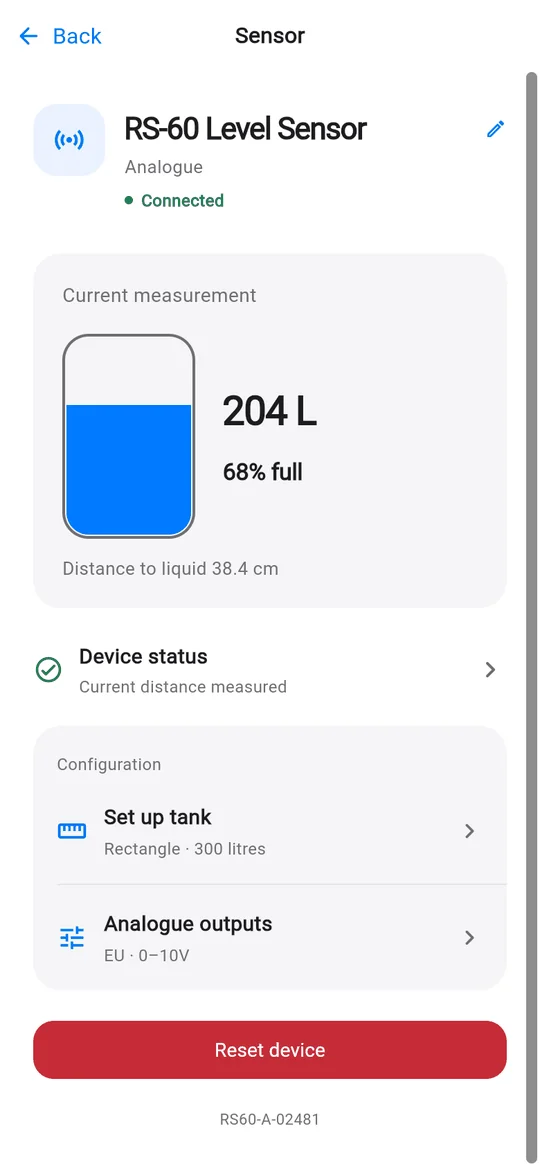
The RS-60 sits on top of the tank and measures the distance to the liquid every second, straight through the plastic. The LiLink app turns that into litres or a percentage for your tank shape.
- ≈ 0 mm
- no blind zone: it reads right up to the top
- up to 300 cm
- tank height
- up to 10 mm
- plastic or GRP wall
Take a closer look.
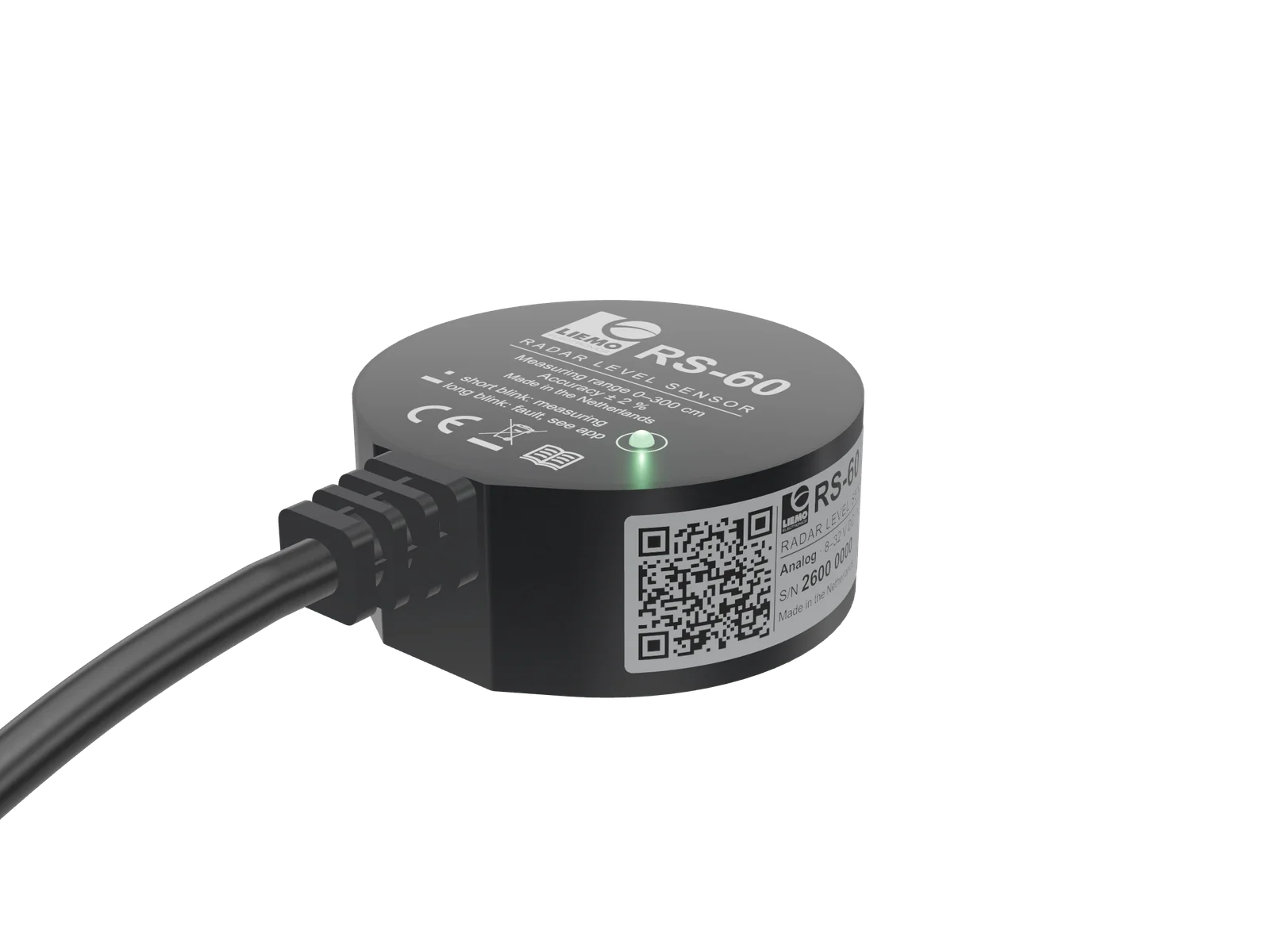
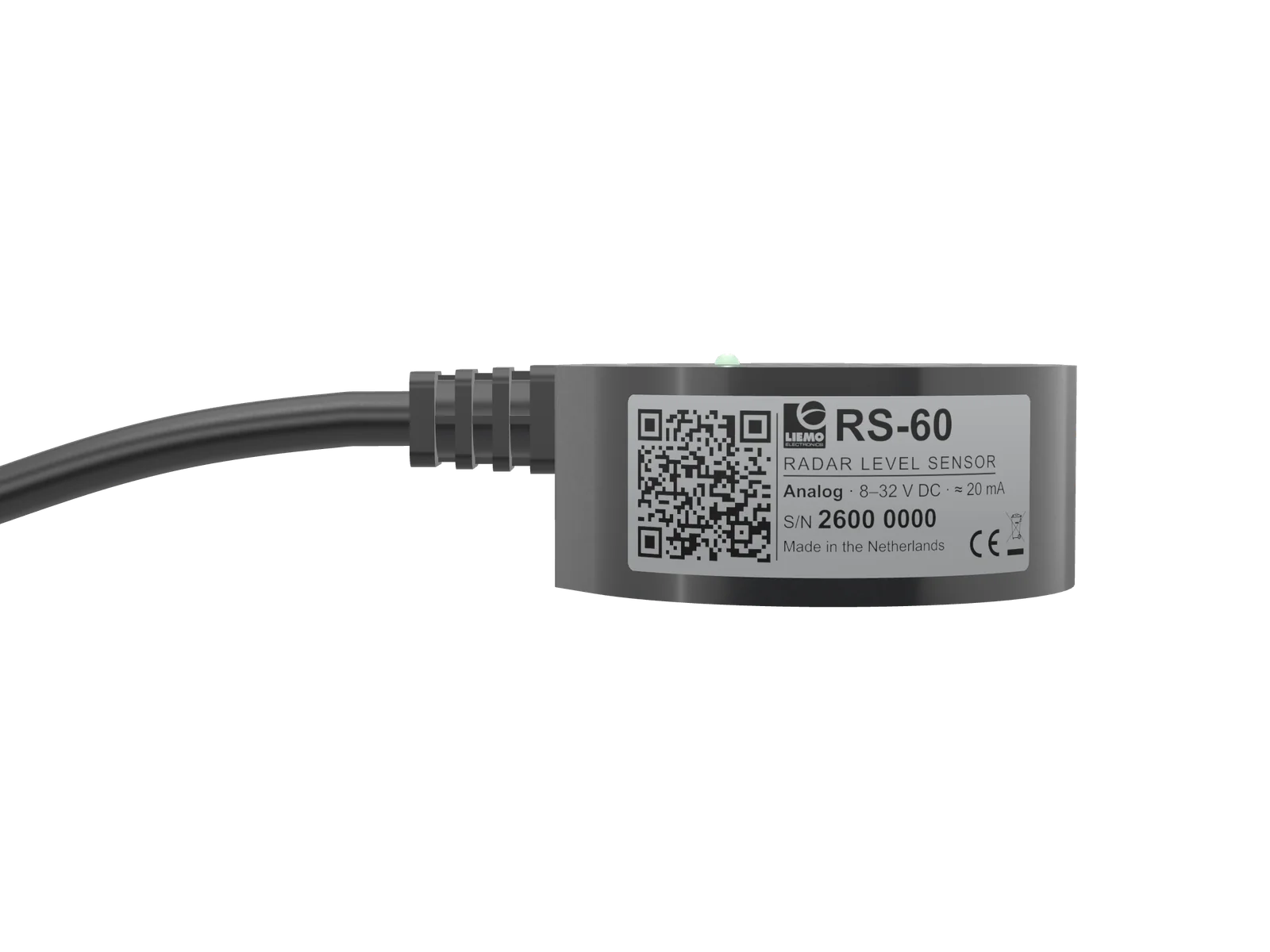
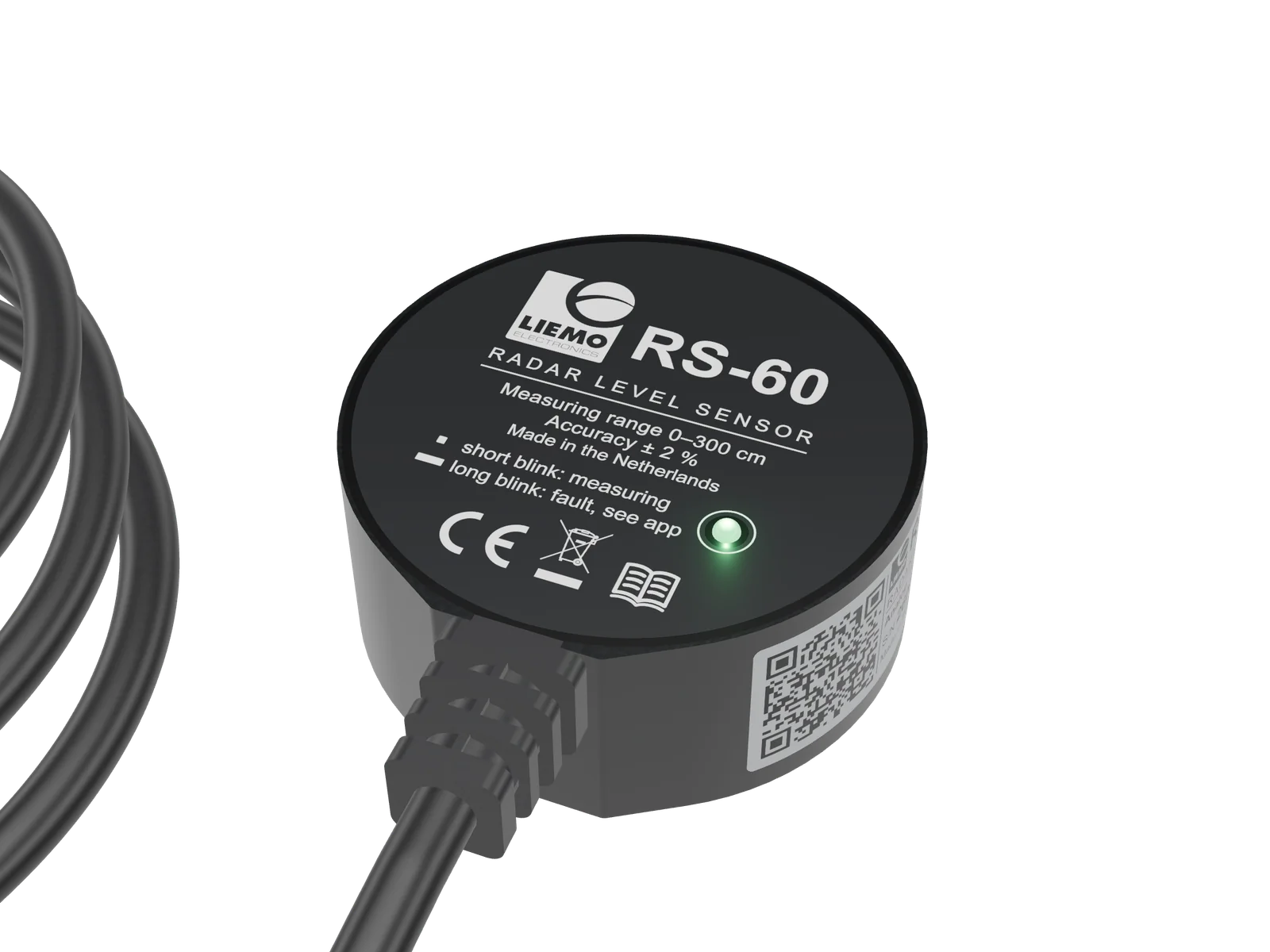
Four versions
One sensor.
Four outputs.
Metal tanks
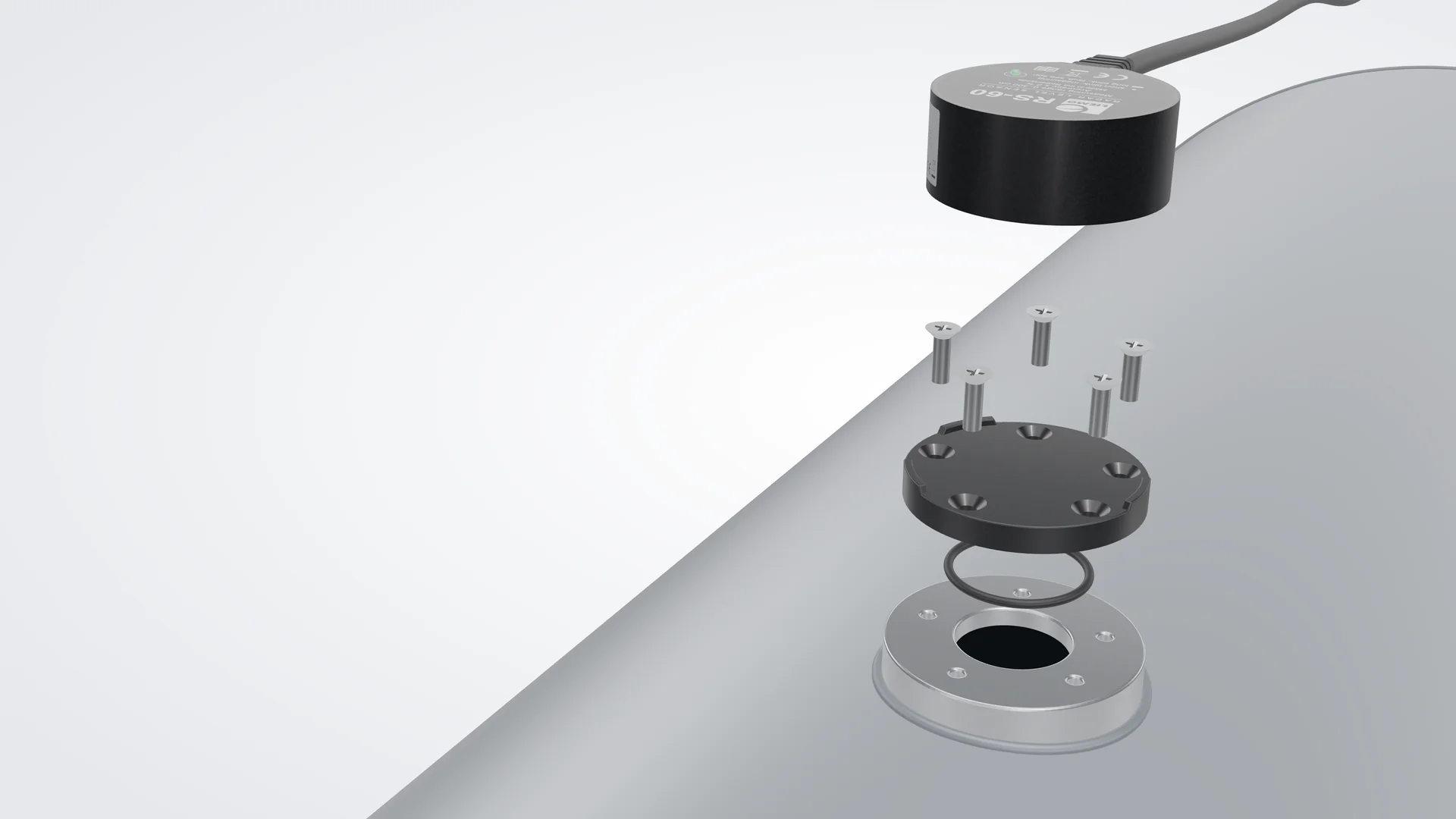
SAE 5 flange adapter.
Radar does not see through steel. The adapter fits the standard 5-hole flange of an existing sender opening, sealed with an O-ring.
Optional accessory.
LiLink app
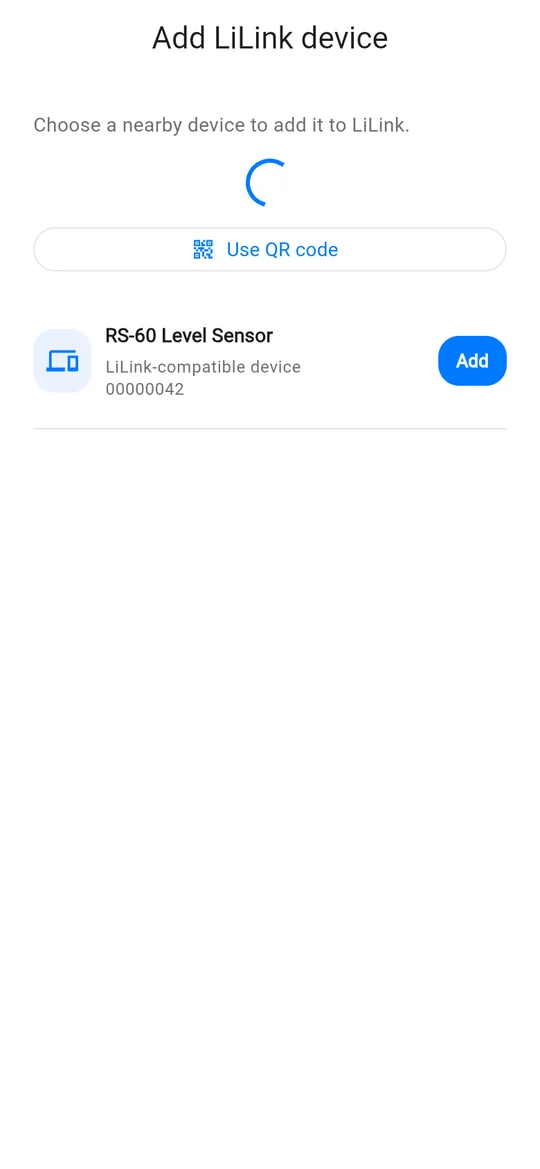
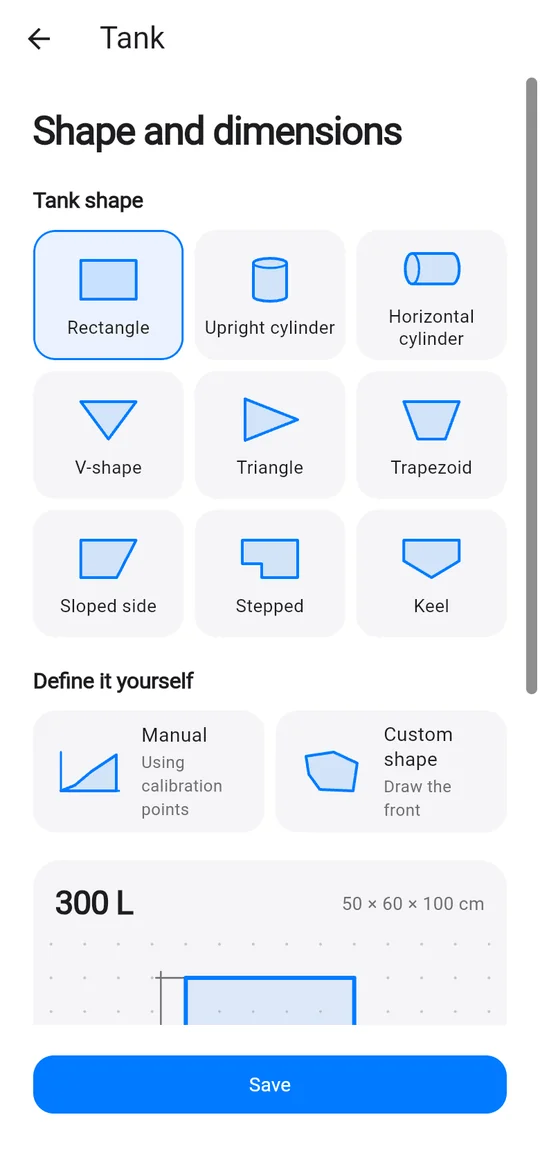
Set up
in minutes.
Coming soon to the App Store and Google Play
For iPhone and Android.
Tech specs
RS-60 at a glance.
- 60 GHz
- FMCW radar, contactless
- up to 300 cm
- tank height
- ± 2 %
- accuracy
- 1 Hz
- a new reading every second
- Ø 63 × 26 mm
- compact, rugged housing
- 8–32 V
- DC supply
- ≈ 20 mA
- current draw at 12 V
- −20 … +70 °C
- operating temperature
Fresh, grey and black water, diesel and petrol. 3-year warranty. All specifications are in the datasheet.
FAQ
Frequently asked
questions.
Choosing
Which version do I need?
Analog for a tank gauge you already have or an analogue input (10–180 Ω, 240–33 Ω, 0–5 V or 0–10 V). NMEA 2000 to see the level on your chart plotter or display. Modbus RTU for a PLC, gateway or monitoring system. LIN for the control panel or system with a LIN bus in a camper or vehicle. Bit rate and frame ID are set in the app.
Will it work on my tank?
Yes, if the tank is plastic (PE, PP, PVC) or fibreglass (GRP), the top wall is up to 10 mm thick and the tank is up to 300 cm tall. You need a flat spot of at least Ø 63 mm on top, above the deepest point.
And metal tanks?
Radar does not see through metal. For metal tanks there is the SAE 5 flange adapter: it takes the place of the old sender on the standard 5-hole flange, and the RS-60 looks through it.
Installing and connecting
Where do I put it?
On top of the tank, directly above the deepest point, flat and level, with a clear view down. Not above pipes, baffles, the filler neck or an old sender. Have a look inside with a torch before you stick it on.
Do I have to remove my old tank sender?
No. Disconnect its wires and leave it where it is. Stick the RS-60 on a spot that is not directly above it.
Will it work with my existing tank gauge?
Yes, with the Analog version. Choose the EU (10–180 Ω) or US (240–33 Ω) standard in the app, or use the 0–5 V or 0–10 V output.
Will my chart plotter show the level?
The NMEA 2000 version sends PGN 127505 (Fluid Level), which chart plotters and displays that support it show as a tank. Set the fluid type and tank instance in the app. On some plotters you add the tank to a page yourself.
In use
Does my phone need to stay connected?
No. You only need the phone to set it up or to have a look. After that the sensor works on its own.
What about sloshing, foam and condensation?
The sensor smooths out sloshing, so the reading stays calm while sailing or driving. Thick foam, for example while filling, can disturb it until the foam settles. Condensation on the inside of the tank usually makes no difference.
Does it need maintenance?
No. It has no moving parts and never touches the liquid. Check now and then that it is still firmly in place and that the cable is undamaged.
Still a question? Ask us →
Interested in the RS-60?
For more information, get in touch. We design and build in Groningen.